The Hierophant
Keywords
Upright Meaning
The Hierophant upright signifies respect for tradition, organized religion, and conventional spiritual wisdom. When this card appears, it suggests you are being called to honor established systems, seek guidance from credible authorities, or embrace formal education and institutional knowledge. This is a card of conformity with purpose—following proven paths that have withstood the test of time. In relationships, The Hierophant indicates commitment, marriage, and traditional values. Professionally, it points toward working within established structures, following protocol, and respecting hierarchy. The Hierophant encourages you to seek mentorship, join formal organizations, or pursue credentials that validate your knowledge. This card also represents moral codes, ethics, and the importance of integrity within social frameworks. It's a reminder that not all traditions are restrictive; many provide essential structure, meaning, and community connection. The Hierophant asks you to consider what wisdom you might gain from elders, institutions, or time-honored practices. This card often appears when you need to make decisions based on established principles rather than personal whims. It may also indicate that conventional approaches will serve you better than rebellion at this moment.
Reversed Meaning
The Hierophant reversed suggests rejecting outdated dogma, questioning authority, and breaking free from restrictive traditions. This inversion indicates a desire to forge your own spiritual path outside conventional frameworks or institutions. You may be experiencing conflict with authority figures, feeling constrained by rigid rules, or recognizing that established systems no longer serve your authentic self. In relationships, this reversal can mean unconventional partnerships, resistance to marriage, or rejection of traditional expectations. Professionally, it may indicate workplace rebellion, difficulty with hierarchies, or a need to challenge the status quo. The Hierophant reversed warns against blind obedience and encourages critical thinking about which traditions truly resonate with your values. However, this position can also manifest as loss of structure, lack of guidance, or disconnection from grounding principles. There's a fine line between healthy independence and destabilizing chaos. This card reversed invites you to examine which traditions genuinely serve you and which ones you've unconsciously accepted. It's a call to develop personal spirituality, pursue unconventional education, or trust your inner wisdom. The key is finding balance between respecting useful structures and liberating yourself from genuinely limiting constraints.
Yes/No Meanings
In Love
Yes—The Hierophant typically indicates committed relationships, marriage, and traditional partnership built on shared values.
In Career
Yes—This card favors institutional success, promotions within hierarchies, and advancement through respecting established channels.
In Finances
Maybe—The Hierophant suggests stable, conventional financial approaches work well, but warns against overly rigid investment strategies.
In Spirituality
Yes—This card affirms your spiritual path, especially within institutional or traditional religious frameworks and formal study.
Symbolism
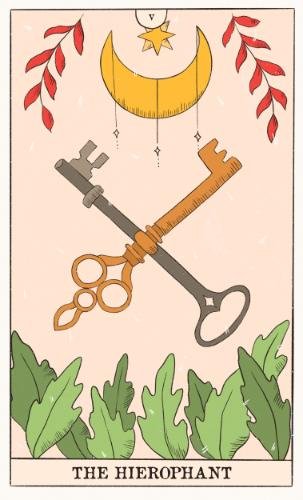
The Hierophant is traditionally depicted as a robed religious figure seated on a throne, holding sacred symbols like a triple cross or religious staff. The figure wears vestments indicating spiritual rank and institutional authority, often including a ceremonial mitre or crown. Two pillars or supporters frequently flank the Hierophant, representing the dual nature of spiritual and material worlds. Kneeling figures before the Hierophant represent the seeker receiving wisdom and blessings from established authority. Keys appear in many depictions—symbolic of unlocking sacred knowledge and accessing hidden spiritual truths reserved for initiates. The Hierophant's positioning on an elevated throne emphasizes the hierarchy between spiritual teacher and student. Religious or institutional symbols—crosses, scrolls, sacred texts—surround the figure, reinforcing connection to organized belief systems. The formal, structured composition contrasts with more spontaneous Major Arcana cards, emphasizing order, ceremony, and tradition. Colors typically include gold (spiritual authority), red (passion for faith), and blue (divine wisdom), creating a palette of sacred authority. The overall imagery communicates respect for established pathways, acknowledgment of legitimate teachers, and the value of traditional knowledge systems passed down through generations.
Practical Advice
When The Hierophant appears, honor the wisdom available through established channels before rejecting traditions outright. Seek mentorship from recognized experts, pursue formal credentials, and respect hierarchies that have proven effective. If facing a decision, ask yourself whether traditional approaches have worked in similar situations. This isn't about blind obedience but intelligent respect for accumulated knowledge. In spiritual matters, consider exploring organized religion, formal meditation training, or established philosophical schools. In career contexts, work within existing systems and show respect for chain of command. However, apply discernment—not all traditions serve everyone equally. Question whether constraints genuinely represent enduring wisdom or merely outdated restrictions. Balance respect for authority with your own critical thinking. The Hierophant encourages finding your authentic spiritual home, whether that's within conventional religion or another established framework that resonates deeply with your values.
Example Scenarios
Scenario 1
A career professional receives job offer from established corporation. The Hierophant upright suggests accepting and advancing through respecting organizational structure and protocol. Focus on learning institutional processes, building relationships with mentors, and demonstrating commitment to company values. This orthodox path offers security and advancement opportunities.
Scenario 2
Someone questioning their childhood religion draws The Hierophant reversed. This suggests permission to explore outside traditional frameworks while acknowledging useful teachings from your background. Rather than complete rejection, integrate what serves you and consciously choose alternative spiritual practices. This card validates your independence without requiring you to destroy all inherited wisdom.
Scenario 3
An engaged couple asks about marriage commitment. The Hierophant upright strongly indicates proceeding with formal ceremony and traditional vows. This card blesses institutional commitment, shared value systems, and public recognition of partnership. It suggests the couple shares fundamental beliefs about marriage's sacred nature and social importance.