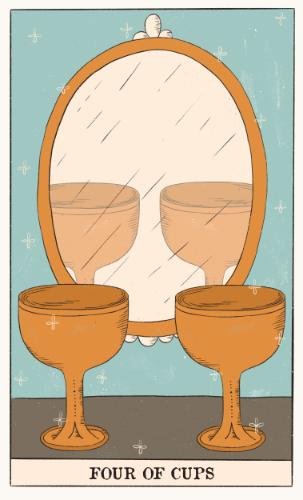
Four of Cups
Keywords
Upright Meaning
The Four of Cups represents a state of emotional stagnation and disengagement from your current circumstances. You may feel uninspired, bored, or dissatisfied with what life is offering, even if external conditions seem favorable. This card often appears when you're in a contemplative phase, turning inward to reassess your emotional needs and desires.
A key aspect of this card is missed opportunities. While you're absorbed in your own thoughts or feelings of discontent, something valuable may be approaching or already present that you're failing to notice. This isn't necessarily negative—sometimes we need this introspective period to gain clarity about what truly matters to us.
Emotionally, you might experience apathy, melancholy, or a sense of being emotionally closed off. Relationships may feel stale, creative projects uninspiring, or social situations draining. The Four of Cups invites you to examine whether this withdrawal is temporary and necessary, or whether it reflects deeper dissatisfaction that needs addressing.
This card encourages honest self-reflection. What are you grieving or mourning? What expectations have not been met? By understanding the root of your discontent, you can move toward genuine change rather than remaining stuck in passive disappointment. The period indicated by this card, while uncomfortable, offers valuable lessons about your authentic desires and emotional boundaries.
Reversed Meaning
When reversed, the Four of Cups indicates emerging from emotional stagnation and renewed engagement with life. You're beginning to recognize opportunities you previously overlooked and showing interest in possibilities that seemed unappealing before. This reversal suggests movement toward greater emotional openness and willingness to participate more actively in your relationships and endeavors.
The reversed position can signify awakening from apathy and reconnecting with gratitude for what you have. You're shifting your perspective, moving from a place of complaint or dissatisfaction toward appreciation and renewed motivation. This might manifest as accepting an opportunity you'd previously rejected, reinvigorating a relationship, or finding inspiration in familiar situations.
However, be cautious of moving too quickly from introspection into hasty decisions. The reversed Four of Cups sometimes indicates jumping at opportunities without proper consideration, simply because you're eager to escape the previous stagnant period. Balance your newfound enthusiasm with the wisdom gained during your reflective phase.
This reversal also suggests improved emotional communication. You're becoming more willing to express your feelings and engage with others authentically. The isolation and emotional distance characteristic of the upright position are dissolving, replaced by renewed connection and presence. You may experience a lifting of depression or negativity that previously clouded your judgment. Use this positive momentum wisely to rebuild relationships, pursue delayed projects, and create meaningful change based on the insights gained during your contemplative period.
Yes/No Meanings
In Love
Maybe—this card suggests emotional unavailability and potential missed connections, though the situation may improve with reflection.
In Career
No—the Four of Cups indicates lack of motivation and missed opportunities, warning against pursuing major career moves during this period.
In Finances
No—emotional dissatisfaction often leads to poor financial decisions; this card advises careful consideration before financial commitments.
In Spirituality
Maybe—this card supports spiritual introspection and meditation, though it may also indicate spiritual stagnation requiring deeper work.
Symbolism
The Four of Cups typically depicts a figure in a seated or reclining position, often shown meditating or in deep thought while turning away from offered gifts or blessings. The figure may be beneath a tree, symbolizing the need for rest and shelter during times of introspection. Usually, three cups are visible to the figure—representing past experiences or established emotional connections—while a fourth cup descends from above, signifying a new opportunity or offering that goes unnoticed.
The cups themselves, as vessels of emotion and relationships, emphasize the emotional nature of this stagnation. The placement of cups varies: some arranged on the ground representing stability and foundation, others held or offered, highlighting the contrast between what's available and what's being rejected or ignored.
Cloudy or overcast skies often accompany this card, reflecting the emotional fog and lack of clarity present during this period. The figure's body language—closed off, inward-focused, sometimes with arms crossed—demonstrates emotional unavailability and resistance to external input. Water imagery frequently appears, representing the emotional realm, though it may be still or stagnant rather than flowing.
The color palette typically includes muted tones, greens for growth potential that remains untapped, and blues reflecting melancholy. These visual elements collectively communicate a period of pause, potential blockage, and the need for emotional reassessment before meaningful progress can occur.
Practical Advice
During a Four of Cups period, prioritize honest self-reflection about your emotional needs and desires. Create space for introspection through meditation, journaling, or therapy rather than forcing yourself to engage socially or professionally. Examine what's causing your dissatisfaction—is it temporary fatigue or a sign of needed life changes? Pay careful attention to new opportunities, as you may overlook something valuable while absorbed in your thoughts. Communicate your emotional state to trusted people rather than withdrawing completely. Set small, manageable goals to gently re-engage with life. Remember that this period, while uncomfortable, provides essential clarity. Don't make major decisions during peak apathy, but do use this time to understand what genuine changes would serve your authentic self.
Example Scenarios
Scenario 1
Maya received a job offer while feeling burnt out from her current role, but the new position seemed uninspiring due to her emotional fatigue. The Four of Cups appeared, encouraging her to examine whether the role was genuinely unsuitable or whether her apathy was temporary. After two weeks of reflection, she recognized the opportunity was actually perfect—her dissatisfaction was situational, not indicative of true disinterest.
Scenario 2
David's partner expressed frustration about emotional distance in their relationship, but he felt unmotivated to address it. The Four of Cups highlighted his withdrawal and the missed gift of deepening intimacy. Recognizing this pattern, he committed to emotional reconnection, ultimately strengthening their bond and discovering his earlier apathy masked his own unmet needs.
Scenario 3
Sarah faced three potential freelance projects but rejected them all, feeling uninspired by everything. The Four of Cups indicated she needed rest before moving forward, not that opportunities were genuinely unavailable. After a week's break and introspection, she felt renewed motivation and accepted a project, approaching it with genuine enthusiasm rather than forced obligation.