Five of Swords
Keywords
Upright Meaning
The Five of Swords represents conflict, discord, and defeat in various life areas. When this card appears upright, it typically indicates that you're experiencing or witnessing a situation where someone has won through dishonest or aggressive means. This victory feels hollow because it's built on betrayal, manipulation, or ruthless tactics rather than fair competition or honest resolution.
In personal relationships, this card warns of arguments that leave lingering resentment, even if one person appears to have won the dispute. The real loss is the damage to trust and connection. Professionally, it might indicate workplace conflicts, backstabbing colleagues, or projects derailed by office politics. You may feel defeated or recognize that continuing to fight isn't worth the emotional toll.
The Five of Swords also suggests you should evaluate whether your battles are worth fighting. Some conflicts cannot be won without sacrificing your integrity or well-being. This card encourages strategic retreat—knowing when to walk away preserves your energy and dignity better than continued struggle.
Financially, this card can indicate losses through disputes, legal conflicts, or poor decisions made in anger. It advises careful contract review and avoiding impulsive financial decisions during tense situations.
Overall, the Five of Swords is about recognizing when a situation is toxic and choosing to disengage. Sometimes the wisest victory is knowing when to surrender and move forward with your dignity intact.
Reversed Meaning
The Five of Swords reversed suggests resolution, reconciliation, and moving past conflict. This card indicates you're choosing the higher path by releasing grudges, apologizing, or accepting that continuing to fight serves no one. It represents wisdom in recognizing that peace is more valuable than proving yourself right.
In relationships, reversed, this card signals a willingness to compromise and repair damage done by conflict. Both parties may be ready to move forward, forgive past hurts, and rebuild trust. It's an excellent indicator for reconciliation after a serious argument or period of tension.
Professionally, this reversal suggests workplace conflicts are being resolved through mediation, honest communication, or leadership intervention. Toxic situations improve as people choose cooperation over competition. Projects can move forward once interpersonal obstacles are cleared.
The reversed Five of Swords also indicates you're learning from conflict and developing better communication skills. You're recognizing that winning arguments often means losing relationships, and you're choosing differently. This card reflects personal growth and maturity in handling disagreements.
Financially, this reversal is more positive, suggesting legal matters are being settled fairly or disputes are resolved without excessive loss. It indicates moving past financial conflicts with clearer perspectives.
This card reversed is ultimately about choosing peace over victory, understanding over dominance, and connection over isolation. It represents the strength required to lay down swords and open yourself to healing and reconciliation.
Yes/No Meanings
In Love
No. This card suggests conflict, betrayal, or relationships damaged by dishonest tactics, making it an unfavorable indicator for positive romantic outcomes.
In Career
No. The Five of Swords indicates workplace conflict, backstabbing, or defeats achieved unfairly, suggesting career advancement through questionable means or professional setbacks.
In Finances
No. This card warns of financial disputes, losses through conflict, or poor decisions made during tense situations that harm your financial stability.
In Spirituality
Maybe. While conflict is present, spiritual growth can occur through learning to release grudges and choosing peace over victory in your spiritual journey.
Symbolism
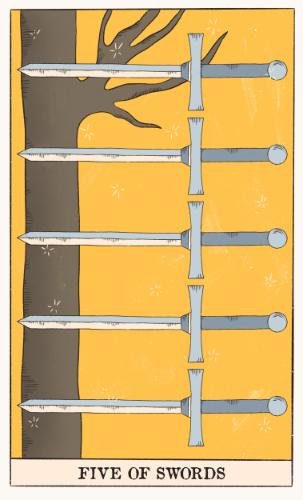
The Five of Swords typically depicts a figure holding multiple swords while others walk away in defeat or despair. The imagery emphasizes the cost of victory achieved through unfair means. The figure often appears smug or uncertain despite their weapons advantage, suggesting the hollow nature of such wins.
The swords themselves represent thoughts, communication, and conflict—the intellectual and verbal battles that lead to psychological wounds. Five swords indicate excessive conflict and fractured understanding between parties. The scattered or gathered swords show whether chaos or control dominates the situation.
The defeated figures in the background represent the emotional collateral damage—relationships damaged, trust broken, and people hurt. Their postures suggest despair, resignation, or the act of walking away from an unwinnable situation.
The sky in many versions appears stormy or grey, reflecting the turbulent emotional climate. This atmospheric detail reinforces that while one person may hold the swords, the environment remains hostile and uncomfortable for everyone involved.
The number five itself symbolizes conflict and instability in numerology, intensifying the card's message of discord. Together, these elements create a powerful warning: victory obtained through manipulation, aggression, or deception creates lasting damage that no triumph can justify.
Practical Advice
When the Five of Swords appears in your reading, assess whether your current conflicts are worth the emotional and relational cost. Ask yourself: Am I fighting to win or to be right? What am I willing to sacrifice for victory? Sometimes the most powerful choice is strategic retreat. Document important conversations, maintain professionalism in disputes, and protect your emotional boundaries. If you've won unfairly, consider making amends. If you've been defeated, focus on recovery rather than retaliation. Seek mediation for serious conflicts. Remember that vindication through manipulation is ultimately self-defeating.
Example Scenarios
Scenario 1
Sarah wins a workplace promotion by taking credit for a colleague's work. While she achieved her goal, the team now resents her, trust is broken, and her victory feels tainted. The Five of Swords warns that her 'success' will create a toxic work environment and damage her professional reputation long-term.
Scenario 2
After a bitter divorce, Mark technically wins the custody battle but his children resent him for how aggressively he fought. The Five of Swords reflects his hollow victory—he won the case but lost the relationships that matter most, illustrating how courtroom wins don't guarantee emotional wins.
Scenario 3
During a business negotiation, James uses deceptive tactics to secure a favorable contract. Initially victorious, he soon discovers the other party feels betrayed and will never do business with him again, damaging his reputation in the industry for a single win.