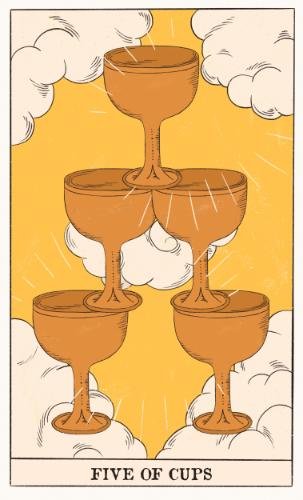
Five of Cups
Keywords
Upright Meaning
The Five of Cups represents a period of emotional hardship, loss, or disappointment that requires acknowledgment and processing. This card appears when you're experiencing grief—whether from a relationship ending, a failed opportunity, or an unfulfilled expectation. The imagery typically shows a figure hunched over spilled cups, unable to see the two standing cups behind them, symbolizing how grief narrows perspective and prevents us from recognizing remaining blessings.
This card encourages honest emotional expression rather than suppression. The pain you feel is valid and deserves attention. However, the card's underlying message is transformative: by moving through grief rather than remaining stuck in it, you access resilience. The Five of Cups suggests that this difficult phase is temporary, even when it feels eternal.
In readings, this card often indicates you're in the thick of emotional difficulty but approaching a turning point. It asks whether you're allowing yourself to feel fully, whether you're isolating unnecessarily, and whether you've acknowledged all your emotions. The card also questions perfectionism—the expectation that life should unfold without disappointment is unrealistic and prolongs suffering.
The Five of Cups ultimately teaches emotional maturity. It validates that loss hurts while simultaneously suggesting that acceptance and integration are possible. This is where real growth begins: not in avoiding pain, but in moving through it with compassion for yourself.
Reversed Meaning
Reversed, the Five of Cups indicates recovery, acceptance, and the beginning of emotional healing. This card suggests you're starting to process grief and move beyond despair, recognizing that life continues beyond loss. Where upright suggests active pain, reversed indicates the pain is beginning to soften, allowing perspective and hope to re-emerge.
This position often appears when you're regaining emotional stability after difficulty. You might be reconnecting with people, rediscovering joy in small moments, or developing self-compassion toward your experience. The reversed card encourages looking at those two standing cups—recognizing that despite loss, resources, support, and possibilities remain available to you.
However, reversed can sometimes indicate unprocessed grief or denial. You might be rushing recovery, avoiding genuine emotional work, or telling yourself you're fine when you're actually suppressing pain. This superficial healing won't last; true recovery requires acknowledging what hurt before moving forward.
Positively, reversed suggests forgiveness—of yourself, others, or circumstances. It indicates personal strength emerging from difficulty and increased emotional resilience. You're learning that you can survive loss and disappointment. This card reversed is profoundly hopeful, indicating that the worst has passed and a new chapter approaches.
The reversed Five of Cups asks: Are you genuinely healing or merely distracting yourself? Can you honor what was lost while embracing what remains? This card promises that emotional equilibrium returns.
Yes/No Meanings
In Love
No, but with compassion—this card suggests emotional difficulty or relationship loss, though reversed might indicate healing toward reconciliation.
In Career
No—this card indicates disappointment, setbacks, or losses in professional contexts, requiring emotional processing before moving forward.
In Finances
No—the Five of Cups suggests financial loss or disappointing outcomes, though upright indicates acceptance rather than denial of the situation.
In Spirituality
Maybe—this card suggests spiritual growth through processed grief and acceptance of life's painful lessons rather than spiritual advancement.
Symbolism
The Five of Cups typically depicts a solitary figure in dark robes, head bowed or covered, standing before five cups—three overturned and spilled, two upright behind them. The spilled cups represent losses and shattered expectations, their contents irretrievable. The figure's posture conveys despair and withdrawal, physical manifestation of emotional pain.
The two standing cups symbolize remaining blessings, resources, or support systems that grief temporarily blinds us to. The figure cannot see them because grief has narrowed their perception. This imagery powerfully illustrates how loss distorts perspective, making us believe everything is destroyed when portions remain intact.
The background often shows stormy, dark weather or a bridge—symbolizing the passage between crisis and recovery, suggesting this difficult period is transitional rather than permanent. Water imagery connects to emotional and emotional depths being explored. The figure's isolation highlights loneliness that often accompanies grief, though the bridge implies reconnection is possible.
The five cups themselves reference the numerology of challenge and change. Five represents conflict and transformation, indicating this painful experience catalyzes growth. The symbolism collectively suggests that while loss is real and grief is valid, perspective and resilience await those willing to move through darkness. The card validates pain while suggesting its temporary nature.
Practical Advice
When the Five of Cups appears, prioritize genuine emotional processing. Allow yourself to feel sadness, anger, or disappointment without judgment. Create space for grief through journaling, talking with trusted people, or therapeutic support. Avoid the temptation to suppress emotions or rush recovery.
Practically, this card asks you to identify what you've lost and what remains. Make a literal list: what's gone and what's still available to you. This exercise combats grief's distorting effects. Consider taking small, nourishing actions: spending time in nature, moving your body gently, or engaging in small acts of self-care.
Connect with supportive people rather than isolating. Grief shared is grief diminished. Finally, recognize that moving through grief isn't about forgetting—it's about integrating the experience into your life story. This card suggests that a month or two from now, your perspective will shift. For now, feel what you feel.
Example Scenarios
Scenario 1
A breakup devastates you, and you initially spiral into despair, unable to see friendships or professional opportunities still available. The Five of Cups represents this moment of acute grief. Over weeks, you gradually reconnect with friends, rediscover hobbies, and realize the relationship ending, while painful, opens new possibilities. This progression from upright to reversed demonstrates the card's healing arc.
Scenario 2
Career setback—you didn't get the promotion you expected. Initially, this feels like complete professional failure. The Five of Cups captures this disappointment. However, as you process it, you recognize the feedback provided direction for growth. You identify other opportunities and appreciate aspects of your current role. Disappointment becomes motivation for development.
Scenario 3
You experience the death of a beloved pet or loss of a significant friendship. The Five of Cups validates the genuine grief this causes. Months pass; you establish new routines, remember joyful times without overwhelming sadness, and potentially open yourself to new connections. The card's journey shows how acceptance doesn't mean forgetting but rather integrating loss into a larger, still-worthwhile life.