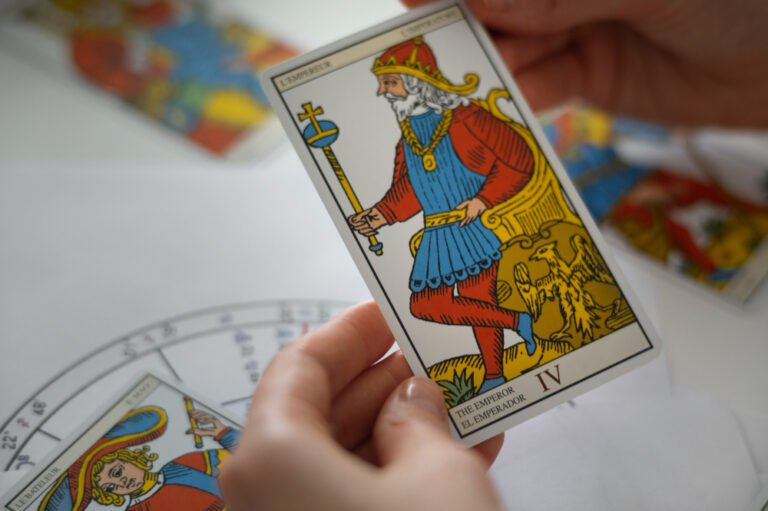
Tarot for Letting Go of Old Versions of Yourself

There’s something deeply tender and challenging about recognizing that who you were yesterday — or even a year ago — might not fully serve who you are becoming today. Letting go of old versions of ourselves isn’t about erasing the past; rather, it’s about gently releasing what no longer fits, making space for growth, for healing, and for a truer alignment with our present journey.
As a tarot reader and spiritual guide, I’ve found that the cards can be an incredibly compassionate companion during these times of transformation. Tarot doesn’t dictate what you must do or who you should be, but it offers a mirror — sometimes a soft whisper, other times a clear reflection — that helps illuminate the stories we cling to and the potential paths ahead. When it comes to shedding old identities, beliefs, or patterns, tarot invites us to sit with discomfort, to witness our own evolution, and to step forward with intention.
Let’s explore how tarot can support the delicate process of letting go of old versions of yourself, weaving together spiritual insights and practical guidance.
Why We Hold on to Old Versions of Ourselves
First, it’s helpful to understand why letting go can feel so difficult. Our identities, even when flawed or limiting, serve as a kind of safety net. They’re woven from memories, experiences, fears, and hopes — the intricate stories we tell ourselves about who we are. To release an old version means stepping into uncertainty. It can stir up grief, resistance, or even a sense of loss.
Sometimes, we cling to outdated self-concepts because they’re familiar, even comforting in a bittersweet way. Other times, societal or familial expectations can anchor us in roles that no longer resonate. Recognizing these attachments with kindness — not judgment — is the first step toward gentle transformation.
How Tarot Reflects Your Inner Landscape
When you turn to tarot during these moments, the cards don’t offer quick fixes. Instead, they present narratives that encourage self-reflection and insight. For example, you might pull cards like The Death card — which, despite its name, is often about transformation and rebirth — or The Hanged Man, symbolizing surrender and new perspectives.
What’s beautiful about tarot is its ability to hold space for paradox. You can see both the sorrow and the hope in shedding what no longer serves you. The cards invite you to explore: What parts of my old self am I ready to release? What fears arise when I imagine letting go? What new aspects of myself are waiting to be embraced?
As an exercise, you might try a simple three-card spread focused on letting go: one card representing the old version of yourself you’re releasing, one card highlighting what you’re learning from this process, and one card pointing toward the new identity you’re stepping into. Reflecting on the symbolism and your intuitive feelings about each card can reveal powerful insights.
Practical Steps for Integration
While tarot offers spiritual guidance, it’s also important to ground this work in practical steps. One approach I often recommend is journaling alongside your tarot draws. After your reading, write down your thoughts about each card, then explore prompts like: “What story about myself am I ready to rewrite?” or “How can I nurture this emerging version of myself?”
Another gentle practice is ritualizing the release. This might involve creating a physical representation of your old self — perhaps writing a letter to that version of you, or crafting a small object that symbolizes old habits or beliefs. Using tarot as a ritual tool, you can invite the energy of transformation with cards like The Tower or The Star, then consciously let go by burning the letter or releasing the object into water, acknowledging that this is a sacred act of surrender and renewal.
It’s also worth remembering that letting go is rarely a one-time event. It’s a process, often cyclical, where you might revisit certain cards or themes as you move through different stages of your growth. Be patient and compassionate with yourself.
Spiritual Reflection: Embracing Impermanence
From a spiritual perspective, the journey of shedding old versions is deeply connected to the principle of impermanence — the understanding that all things, including identity, are in constant flux. Many spiritual traditions encourage us to embrace this change rather than resist it, seeing it as an essential part of awakening.
Tarot, in its rich symbolism, echoes this wisdom. Cards such as The Wheel of Fortune remind us of cycles and the flow of life’s seasons. By engaging with these cards, you’re reminded that transformation is natural and necessary, and that clinging too tightly to a fixed self can limit your soul’s expansion.
In my own practice, I often find comfort in returning to The Fool — a card that embodies beginnings, trust, and openness to the unknown. When you’re ready to step beyond your old self, The Fool invites you to take that leap with curiosity and courage, even if the path ahead is uncertain.
Final Thoughts: Compassion on the Path
Letting go of old versions of yourself is a tender form of self-love. It requires honesty, courage, and above all, compassion. Tarot can be a gentle guide on this path, not by telling you who to be, but by helping you listen to your own inner wisdom and feel supported in your transformation.
If you’re in this space right now, I encourage you to approach your tarot practice with openness and patience. There’s no rush to become someone else overnight. Instead, allow the cards to illuminate your journey, reminding you that growth is a sacred process — one that honors every chapter of your story, old and new.
May your letting go be gentle, and your becoming be joyful.