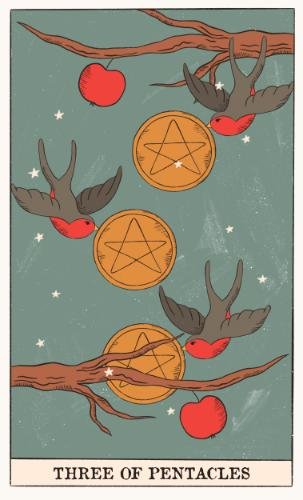
Three of Pentacles
Keywords
Upright Meaning
The Three of Pentacles embodies the principle that exceptional results emerge from collaborative effort and genuine skill development. This card depicts skilled workers united in purpose, suggesting you're either engaged in or about to enter a meaningful partnership or group project. The upright position indicates strong communication, mutual respect, and shared vision among team members.
In career contexts, this card signals promotion opportunities, recognition for your work, or advancement through demonstrated competence. Your contributions are valued, and others recognize your expertise. This is an excellent time to showcase your abilities, take on leadership roles, or mentor others who are beginning their journey.
The Three of Pentacles also emphasizes the importance of continuous learning and refinement of your craft. Whether you're mastering a skill, completing formal training, or developing professional expertise, dedication yields tangible results. Collaboration doesn't diminish individual achievement; rather, it amplifies it through diverse perspectives and complementary strengths.
Financially, this card suggests stable income from skilled work, successful business partnerships, or projects that generate reliable returns. Investment in education or professional development pays dividends. The card encourages you to recognize that your value in the marketplace increases with demonstrated skill and proven results.
This card reminds us that pride in workmanship, accountability to team members, and commitment to excellence create sustainable success and genuine fulfillment in professional endeavors.
Reversed Meaning
When reversed, the Three of Pentacles indicates breakdown in collaboration, communication failures, or disputes within team environments. This position suggests conflicts with colleagues, poor project coordination, or feeling undervalued despite genuine contributions. Misunderstandings between team members create friction that impedes progress and undermines morale.
Career-wise, the reversed Three of Pentacles warns of being overlooked for promotion, lack of recognition for your work, or difficulty receiving proper compensation for your skills. You may feel isolated from professional advancement or excluded from important projects. This card can indicate inadequate training, skill gaps that require attention, or working in environments that don't appreciate your expertise.
The reversal suggests possible incompatibility with collaborators, whether due to differing work ethics, unclear expectations, or personality conflicts. Projects may stall due to poor leadership, unclear objectives, or team members pulling in different directions. There's a sense of wasted potential when talent and effort aren't properly channeled or recognized.
Financially, this position warns of unstable income from collaborative ventures, failed business partnerships, or losses from poorly managed joint projects. Investments in education may not yield expected returns, or skills learned don't translate to market value. Disputes over shared financial responsibilities or unequal contribution burdens emerge.
The reversed card encourages reassessing team dynamics, clarifying communication, and addressing legitimate grievances. Sometimes removing yourself from problematic collaborations becomes necessary. Focus on developing skills independently and seeking environments where your contributions receive proper recognition and compensation.
Yes/No Meanings
In Love
Maybe—this card suggests collaborative harmony and teamwork, but romantic relationships require more personal intimacy than professional partnership.
In Career
Yes—the Three of Pentacles strongly indicates career advancement, successful projects, and professional recognition through collaboration.
In Finances
Yes—this card suggests stable income from skilled work, successful partnerships, and tangible financial rewards from demonstrated competence.
In Spirituality
Maybe—while this card addresses growth through learning and mentorship, it's more material than spiritually focused.
Symbolism
The Three of Pentacles traditionally depicts skilled workers—often masons or craftsmen—collaborating on architectural or structural projects under the guidance of a master or architect. The three pentacles visible in the image represent material reward, practical achievement, and concrete results from combined effort.
The architectural setting symbolizes building something substantial and lasting, emphasizing that collaborative work creates foundations stronger than individual efforts alone. The hierarchical arrangement of figures—with a master directing apprentices or colleagues—illustrates knowledge transfer, mentorship, and respectful working relationships based on experience and expertise.
The pentacles themselves ground this card in the material realm, confirming that collaboration produces tangible, measurable outcomes: completed projects, earned income, professional advancement, and practical recognition. This isn't abstract cooperation; it's results-oriented teamwork focused on creating something of real value.
The craftsmanship theme throughout emphasizes mastery developed through practice, dedication, and willingness to learn from experienced practitioners. This suggests excellence isn't achieved in isolation but through exposure to proven methods and collaborative refinement of techniques. The card celebrates the dignity of skilled work and the mutual respect that professional excellence commands among practitioners.
Practical Advice
Evaluate your current projects and partnerships with honest assessment of team dynamics and contribution balance. If collaborations are thriving, invest in strengthening these relationships through clear communication and shared recognition of achievements. Seek mentorship opportunities if you're developing new skills, and offer guidance to others beginning their professional journey.
Identify where your expertise is underutilized or undervalued, then strategically position yourself for recognition. Document your contributions and accomplishments clearly. If team conflicts exist, address them directly and professionally. Sometimes the most effective action is improving your own skill level, making you increasingly indispensable. Consider whether formal training or credential development would enhance your market value and professional standing.
Example Scenarios
Scenario 1
A graphic designer receives a complex corporate rebrand project requiring collaboration with copywriters, strategists, and clients. The Three of Pentacles indicates successful coordination where each specialist's contribution creates comprehensive, excellent results. Recognition and potential leads follow, demonstrating how focused teamwork yields professional advancement.
Scenario 2
An employee has been passed over for promotion despite solid performance. The Three of Pentacles reversed suggests they should seek feedback, identify skill gaps, or consider whether their talents are properly valued in their current environment. They might pursue professional development or explore positions where their expertise receives appropriate recognition.
Scenario 3
A small business partnership faces miscommunication and unclear role definitions. The Three of Pentacles reversed warns that without addressing these issues, the partnership deteriorates. Establishing clear expectations, regular communication protocols, and equitable responsibility distribution becomes essential for salvaging the collaborative venture.