Ten of Swords
Keywords
Upright Meaning
The Ten of Swords represents hitting rock bottom, experiencing painful revelations, or facing the consequences of difficult circumstances. This card often appears when you're dealing with betrayal, heartbreak, failure, or overwhelming mental stress. The ten swords suggest complete defeat or exhaustion of a situation—nothing more can go wrong because the worst has already happened.
In practical terms, this card indicates a need to acknowledge hard truths you may have been avoiding. It might represent failed relationships, lost opportunities, or projects that have collapsed. The key aspect is that this is an endpoint; something has reached its natural conclusion, whether you're ready or not.
Psychologically, the Ten of Swords reflects rumination, anxiety, and catastrophic thinking patterns. You may feel victimized by circumstances or overwhelmed by negative self-talk. The card encourages you to recognize that while the pain is real, dwelling on it prolongs suffering.
The positive interpretation suggests that completion of this difficult cycle allows for renewal. Once you've reached the bottom, the only direction is upward. This card invites acceptance of what cannot be changed and preparation for the healing and fresh starts that follow. The dawn depicted in many versions of the card symbolizes hope emerging from darkness, indicating that this painful period is temporary.
Reversed Meaning
When reversed, the Ten of Swords indicates recovery, healing, and moving beyond crisis. This position suggests you're beginning to release painful thoughts, recover from betrayal, or emerge from a difficult situation. The reversed card shows someone rising from defeat, refusing to stay victim to circumstances.
This reversal can mean avoiding the full impact of the Ten of Swords upright—perhaps you're developing resilience before reaching absolute bottom, or you're successfully processing trauma rather than dwelling in it. It represents mental clarity returning after confusion, forgiveness replacing bitterness, and hope replacing despair.
In some contexts, reversed can indicate self-sabotage or refusing to accept necessary endings. You might be avoiding the reality that something needs to end, prolonging pain through denial. Alternatively, it can suggest that you're exaggerating problems or catastrophizing unnecessarily—the situation isn't as dire as you perceive.
Positively, the reversed Ten of Swords shows resilience, acceptance, and moving forward. You're learning from painful experiences and choosing not to be defined by them. This card indicates that perspective is shifting; what seemed devastating now appears survivable. It encourages self-compassion and recognition of your strength in enduring difficult circumstances. The reversal signals a turning point where you consciously decide to heal rather than remain stuck in suffering. Recovery is not just possible—it's actively occurring.
Yes/No Meanings
In Love
NO - This card suggests heartbreak, betrayal, or painful endings in romantic contexts, though the relationship's completion allows for genuine healing and future connections.
In Career
NO - The Ten of Swords indicates job loss, project failure, or professional betrayal, signaling that pursuing current direction will lead to disappointment.
In Finances
NO - This card warns of financial loss, poor investments, or economic hardship, suggesting that financial decisions in this period require extreme caution.
In Spirituality
MAYBE - While painful, this card represents spiritual crisis that ultimately strengthens faith through testing; suffering can deepen spiritual understanding if embraced consciously.
Symbolism
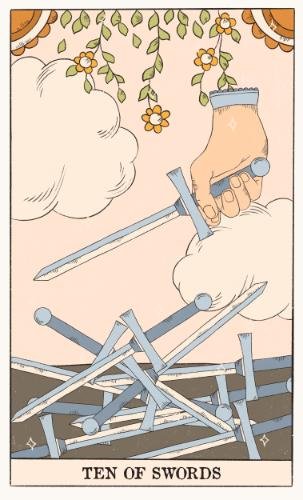
The Ten of Swords traditionally depicts a prone figure pierced by ten swords, representing complete defeat and mental anguish. The multiple blades symbolize accumulated suffering, repeated disappointments, or thoughts attacking from all directions. The figure's horizontal position suggests surrender or collapse after prolonged struggle.
The dark stormy sky often shown in the background represents turbulent emotions and mental chaos. Many versions include a dawn or sunrise on the horizon, symbolizing hope and the promise that darkness is temporary—this is a crucial element indicating that even in despair, renewal is possible.
The ten swords themselves represent the suit of intellect pushed to its extreme—excessive thinking, mental torment, and analytical mind become destructive rather than helpful. The arrangement of all ten swords (the complete number) suggests finality and completion; nothing remains undone in this painful process.
The card's positioning low or on the ground represents humility, surrender, and acceptance of circumstances beyond control. Water elements often present suggest emotional depth and the necessity of releasing pent-up feelings. Together, these symbols communicate that while this is genuinely difficult, it's also a transition point with inherent wisdom—sometimes we must reach our lowest point to understand what truly matters and rebuild authentically.
Practical Advice
When the Ten of Swords appears, first acknowledge that your pain is valid—don't minimize genuine difficulty. However, commit to distinguishing between actual circumstances and catastrophic thinking about them. Create mental space by limiting rumination: set specific times to process feelings rather than allowing them to dominate all moments.
Practically, identify what's actually within your control versus what isn't, then release energy spent on unchangeable factors. Take concrete steps toward recovery: seek support through therapy, trusted friends, or professional help if needed. Implement grounding techniques to manage anxiety and mental overwhelm.
Most importantly, recognize this as a transition point. Use this crisis as motivation to change patterns that contributed to this situation. The card invites you to extract wisdom from difficulty rather than merely surviving it. Small forward movements—exercise, creative expression, helping others—rebuild agency and perspective. Accept that healing isn't linear; setbacks are normal. Focus on incremental progress rather than expecting rapid transformation.
Example Scenarios
Scenario 1
A person receives devastating news about a relationship ending after months of conflict and uncertainty. Initially feeling destroyed, they recognize this painful conclusion was inevitable. By acknowledging the relationship's incompatibility and their own role in conflicts, they begin processing grief productively. Within weeks, they recognize relief alongside sadness—the constant uncertainty was actually more painful than the ending itself. This represents moving from the full impact of the card toward acceptance.
Scenario 2
Someone faces job termination due to company restructuring and realizes they've been in the wrong position for years. While initially devastated, they recognize the termination forces necessary change they avoided making independently. This crisis becomes catalyst for pursuing work aligned with their values. They see the painful ending as opportunity disguised in difficulty, representing the card's promise that rock bottom enables authentic rebuilding.
Scenario 3
A person discovers a close friend's betrayal and feels completely devastated, believing they cannot trust anyone. Rather than isolating, they process anger and hurt through journaling and therapy. They recognize the betrayal reflects the friend's issues, not their worthiness. This understanding transforms the painful lesson into wisdom about healthy boundaries. The ten swords pierce, but the person consciously chooses not to remain pinned by them.