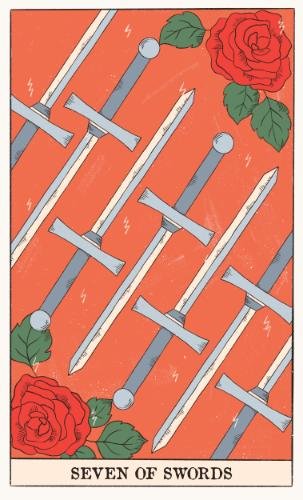
Seven of Swords
Keywords
Upright Meaning
The Seven of Swords upright typically indicates a situation involving deception, theft, or strategic maneuvering. This card suggests that cunning and intellect are being employed, though not necessarily for noble purposes. You may be encountering someone who is being dishonest or manipulative, or you yourself might be considering taking shortcuts through deceit. The card warns about the temporary nature of such solutions—what's taken dishonestly will eventually be discovered. In some contexts, it can represent necessary strategy in competitive situations, suggesting you need to be clever and cautious. The upright position emphasizes the active phase of deception or the planning stages of a scheme. It calls for awareness and critical thinking, urging you to question appearances and dig deeper into situations. This card often appears when someone is getting away with something momentarily, but the underlying message is that such actions carry risks. Trust becomes a central theme, as does the question of whether the ends justify the means. The Seven of Swords encourages honest self-assessment about your own motivations and actions. Are you being truthful with yourself and others? What are you willing to compromise for short-term gains?
Reversed Meaning
When reversed, the Seven of Swords suggests exposure, honesty, or the failure of deceptive schemes. This position indicates that hidden truths are coming to light, and dishonesty is being revealed. If you've been considering or engaging in deception, this card warns that the truth will emerge, and consequences are inevitable. Conversely, it can represent your own awakening to deception that others have perpetrated against you—finally seeing through the illusion. The reversed position often brings relief after suspicion, clarity after confusion. It may indicate confession, transparency, or choosing the honest path despite difficulties. This card can also suggest that a period of trickery or manipulation in your life is ending, allowing for rebuilding trust. For those caught in others' schemes, the reversed Seven of Swords promises that the truth will eventually vindicate them. It emphasizes the importance of integrity and the long-term rewards of honest dealing. The card encourages moving forward with transparency, even if admitting mistakes feels uncomfortable. It represents a turning point toward greater authenticity and genuine connection with others. In some readings, it suggests that you're overcoming your own tendency toward manipulation or learning to trust again after betrayal.
Yes/No Meanings
In Love
MAYBE - The card suggests hidden issues or deception in the relationship that need addressing before a clear positive answer is possible.
In Career
NO - This card indicates that success through dishonest means is unstable and risks professional reputation and opportunities.
In Finances
NO - Financial gains made deceptively will be temporary and come with consequences that outweigh short-term benefits.
In Spirituality
NO - Spiritual growth requires honesty and integrity; deception contradicts authentic spiritual development and inner peace.
Symbolism
The Seven of Swords depicts a figure in a crouched position, carefully carrying away multiple swords while glancing back nervously. The furtive posture and backward glance emphasize guilt and awareness of wrongdoing. Some stolen swords are left behind, suggesting the scheme is incomplete or imperfect. The background often shows a camp or settlement with guards, reinforcing the element of risk and detection. The swords themselves represent intellectual power, communication, and thought—indicating that deception operates through clever thinking rather than force. The number seven traditionally relates to rest, reflection, and sometimes shadowed wisdom. The limited number of swords taken (seven) versus those left behind suggests this theft is selective and calculated. The figure's clothing and demeanor often appear refined, contrasting with the base act of stealing, illustrating how deception can wear sophisticated masks. The muted color palette in many versions emphasizes the murky, uncomfortable nature of dishonesty. This card's imagery serves as a visual warning about the temporary nature of gains made through deceit and the psychological weight of maintaining lies.
Practical Advice
When the Seven of Swords appears, pause and honestly assess the situation. Are you being deceived, or are you considering deception yourself? Trust your intuition—if something feels off, investigate further. If you've been dishonest, consider coming clean now rather than facing exposure later; confession often carries less severe consequences than discovery. In professional or personal negotiations, recognize that while clever strategy isn't inherently wrong, it must remain ethical. Ask yourself: What am I willing to compromise? What's my long-term goal? Protect yourself by verifying information, reading fine print, and not accepting surface explanations. Build relationships on transparency rather than manipulation. If someone is deceiving you, document evidence quietly before confronting them. Remember that sustainable success requires integrity.
Example Scenarios
Scenario 1
Career: You discover a colleague took credit for your work in a meeting. The Seven of Swords confirms your suspicion that deception occurred. Rather than immediate confrontation, gather documentation and communicate your contributions clearly to your manager privately. This strategic response protects your reputation and career trajectory without escalating workplace conflict unnecessarily.
Scenario 2
Relationship: Your partner seems distant and secretive with their phone. This card appears warning of hidden communication or emotional infidelity. Rather than accuse, create safe space for honest conversation about relationship concerns. Trust may be restored through transparency or you may discover the relationship requires honest reassessment about compatibility and future together.
Scenario 3
Finances: You're offered an investment opportunity with unusually high returns and vague details. The Seven of Swords cautions against involvement. Research thoroughly and consult financial advisors before committing. Many schemes rely on withholding information; legitimate investments welcome scrutiny. Protecting your assets requires asking difficult questions and being skeptical of promises that sound too advantageous.