Three of Swords
Keywords
Upright Meaning
The Three of Swords signals a period of mental struggle, difficult communication, or painful truths coming to light. This card traditionally represents heartbreak, conflict, or sorrow, but more broadly indicates a time when clarity arrives through discomfort. You may be experiencing disagreements that require honest dialogue, receiving news that challenges your worldview, or facing a situation that demands straightforward thinking despite emotional pain. The Swords suit's association with intellect means this struggle is primarily mental or communicative rather than purely emotional. This is not a card of permanent damage but rather a necessary confrontation with reality. The three-point structure suggests multiple perspectives colliding or three aspects of a situation requiring your attention. During this period, clarity emerges through dialogue and truthful assessment. While uncomfortable, this card indicates that avoiding these difficult truths would only prolong suffering. The discomfort serves a purpose: it strips away illusions and forces authentic communication. This is a time to speak your truth even when difficult, listen to hard feedback, and accept that some pain is transformative. The card suggests that moving through this challenging period with honesty and directness will lead to eventual clarity and relief. Consider this a temporary storm that clears the air rather than permanent darkness.
Reversed Meaning
The Three of Swords reversed suggests relief from mental anguish, healing from conflict, or the resolution of difficult communication patterns. You may be emerging from a challenging period, reconciling after disagreement, or finally understanding a situation that previously caused confusion. This reversal can indicate that the worst has passed and calmer times approach. However, it can also warn against avoiding necessary conversations or ignoring problems that require confrontation. The reversed position sometimes represents suppressed truth, denial of reality, or choosing comfortable lies over difficult honesty. You might be recovering from heartbreak, healing from misunderstanding, or finding peace after turmoil. In some contexts, this reversal suggests that you're learning to communicate more effectively or developing emotional resilience. If this reversal appears when you're avoiding necessary conflicts, it's a reminder that true healing requires addressing root causes rather than simply hoping problems dissolve. The card encourages you to release grudges, forgive misunderstandings, and move forward with renewed clarity. This is an excellent time for reconciliation, therapy, or honest conversations that rebuild broken trust. The reversed Three of Swords indicates that you have the strength to move past suffering and the wisdom to integrate lessons learned from difficulty.
Yes/No Meanings
In Love
No - This card suggests conflict, heartbreak, or painful separation rather than positive romantic progression.
In Career
No - The Three of Swords indicates workplace conflict, miscommunication, or difficult decisions ahead.
In Finances
No - This card warns of financial stress, unexpected expenses, or difficult financial choices requiring tough decisions.
In Spirituality
Maybe - While difficult, this card can represent necessary spiritual growth through confronting hard truths about yourself.
Symbolism
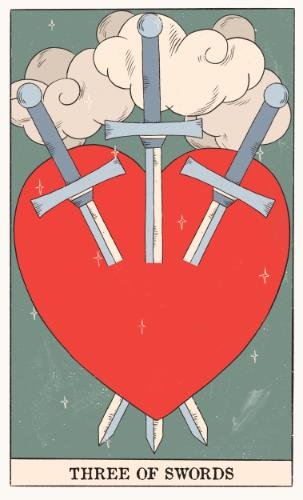
The Three of Swords typically depicts three swords piercing through a heart or cloud, symbolizing mental pain cutting through emotional centers. The heart represents vulnerability and emotional stakes, while the three swords embody multiple conflicts, perspectives, or truths simultaneously. The grey or stormy background suggests confusion and turbulent emotional weather. Swords as intellectual tools indicate this suffering is primarily mental or communicative rather than physical. The number three represents completion of a cycle, wholeness through difficulty, and multiple aspects demanding attention. Some depictions include rain or storm imagery, symbolizing the cleansing nature of difficulties. The piercing action suggests both pain and penetration—these truths cut through our defenses to reach deeper understanding. Traditional imagery sometimes shows a tower or castle in the distance, representing stability that exists beyond current turmoil. The card's visual composition emphasizes sharp angles and pointed elements, reinforcing the intellectual nature of this suffering. Unlike physical swords, these mental swords cut through illusions and false beliefs, creating clarity despite pain. The overall symbolism suggests that this difficult moment serves a higher purpose: stripping away pretense and forcing authentic engagement with reality.
Practical Advice
When the Three of Swords appears, prioritize honest communication over comfort. Address conflicts directly rather than avoiding them, recognizing that temporary discomfort prevents prolonged suffering. Listen to difficult feedback without defensiveness, as painful truths often contain valuable information. If experiencing heartbreak, allow yourself to feel the full spectrum of emotions rather than rushing recovery. Consider writing out your thoughts to clarify mental confusion. Seek mediation if conflicts involve others, as neutral perspectives help resolve stalemates. Avoid making permanent decisions during peak emotional turmoil; wait for clarity to settle. Practice self-compassion during this challenging period, recognizing that suffering is temporary. Use journaling or therapy to process difficult realizations. Remember that moving through this period honestly creates foundation for genuine healing.
Example Scenarios
Scenario 1
A person receives difficult feedback at work revealing their communication style alienates colleagues. While painful, this truth creates opportunity to develop better workplace relationships. They schedule coaching and implement feedback, eventually building stronger team dynamics. The temporary discomfort of confronting this truth leads to professional growth.
Scenario 2
A relationship reaches a breaking point after unresolved conflicts accumulate. Partners have an honest conversation acknowledging incompatibility, leading to compassionate separation. Though heartbreaking, this difficult truth prevents years of resentment. Both parties eventually find better-matched relationships.
Scenario 3
Someone faces a health diagnosis requiring major lifestyle changes. Initial shock and grief emerge, but accepting this truth enables informed medical decisions and empowering health modifications. The difficult knowledge, though unwelcome, provides necessary clarity for protecting long-term wellbeing.