
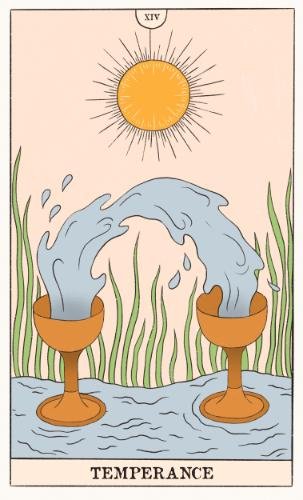
Temperance
Keywords
Upright Meaning
Temperance in the upright position signifies a period of harmony, balance, and measured progress. This card indicates that you are successfully integrating opposing forces in your life—whether they be work and rest, logic and emotion, or different relationships and responsibilities. You are approaching situations with patience and a calm demeanor, avoiding extremes and finding the middle path. Temperance suggests healing and restoration, as you blend disparate elements into a cohesive whole. In practical terms, this card often appears when you're managing multiple commitments effectively, maintaining emotional equilibrium despite challenges, or adopting a long-term perspective that values steady progress over quick gains. The card encourages moderation in all things and warns against overindulgence or obsessive behavior. It's a sign of personal growth through self-discipline and conscious choice rather than restriction. Temperance also speaks to collaboration and finding common ground, suggesting that compromise and mutual understanding are key to current situations. This card frequently appears when you're in a phase of self-improvement, whether through meditation, therapy, exercise routines, or spiritual practice. The overall message is one of encouragement—you are on the right path by maintaining balance and avoiding extremes. Trust in the process of gradual, steady development.
Reversed Meaning
Temperance reversed indicates imbalance, excess, and a lack of moderation in your life. You may be struggling with extremes—overindulgence, addiction, or obsessive behaviors—or finding it difficult to manage competing demands. This card reversed suggests that you're experiencing discord between different aspects of yourself or your life, whether through conflicting emotions, unresolved internal conflicts, or inability to find common ground with others. There may be a sense of fragmentation or feeling pulled in multiple directions without a clear center. Temperance reversed can also indicate impatience and a desire for immediate results, leading to hasty decisions or shortcuts that ultimately backfire. You might be resisting the need for balance, pushing yourself too hard, or refusing to compromise. This position sometimes reflects communication breakdowns, where understanding and negotiation have failed. It may also suggest that you're out of touch with your inner wisdom or spiritual center, making decisions based purely on impulse or external pressure. The card warns that continuing on your current path without addressing these imbalances will lead to burnout, relationship strain, or health issues. It's a call to reassess your priorities, implement boundaries, and consciously work toward greater equilibrium. Consider where extremism is present and commit to finding the middle way.
Yes/No Meanings
In Love
Yes, with the caveat that healthy love requires balance and mutual respect.
In Career
Yes, indicating steady progress through moderation and balanced effort.
In Finances
Yes, suggesting financial stability through measured decisions and avoiding risky extremes.
In Spirituality
Yes, showing you're successfully integrating spiritual practice with daily life.
Symbolism
In traditional Tarot imagery, Temperance depicts an angelic figure pouring liquid between two cups, symbolizing the blending of opposites and the flow of energy. The figure typically stands with one foot on land and one in water, representing the integration of earthly and emotional realms. The angel's serene expression conveys calm authority and purposeful action. The two cups often represent different elements or aspects of life being harmoniously combined. Mountains in the background suggest stability and spiritual elevation, while the flowing water indicates emotional fluidity. The card's color palette of blues, whites, and golds evokes tranquility and divine influence. Some depictions include an iris or flame above the angel, symbolizing resurrection and spiritual transformation. The overall composition suggests movement and process rather than static balance—temperance is an active, ongoing practice of integration. The card emphasizes that balance isn't about stillness or compromise that weakens both sides, but rather a dynamic equilibrium where different forces enhance one another. Every element reinforces the message that harmony comes through conscious blending of opposing forces with wisdom and grace.
Practical Advice
Implement specific practices to cultivate balance: establish daily routines that include work, rest, and spiritual practice; set clear boundaries between different areas of life; practice mindfulness or meditation to develop emotional regulation; evaluate where you're experiencing excess or deficiency. If you're managing multiple projects, create a structured schedule that prevents burnout. In relationships, prioritize open communication and seek compromises that honor both parties' needs. When facing decisions, pause before acting—give yourself time to consider all perspectives. Monitor your consumption of anything—food, work, substances, media—ensuring moderation. Identify one area of imbalance and commit to bringing it into equilibrium over the next month. Remember that balance isn't about perfection; it's about conscious, deliberate choices that support your wellbeing.
Example Scenarios
Scenario 1
A professional managing multiple projects uses Temperance principles by allocating specific hours to each, maintaining quality without burnout. When career and personal life threaten imbalance, they consciously schedule personal time and stick to work boundaries. This steady, measured approach leads to sustained success rather than explosive growth followed by collapse.
Scenario 2
In a relationship conflict, both partners see Temperance appear and recognize the need for compromise. Instead of extreme positions, they discuss each other's core needs and find middle-ground solutions that honor both perspectives. This collaborative approach rebuilds trust and creates a more harmonious dynamic.
Scenario 3
Someone struggling with health issues receives Temperance as guidance to balance exercise, nutrition, rest, and medical care holistically. Rather than obsessing over one aspect, they integrate multiple wellness practices gradually. This comprehensive, patient approach leads to genuine healing rather than temporary fixes.