Nine of Swords
Keywords
Upright Meaning
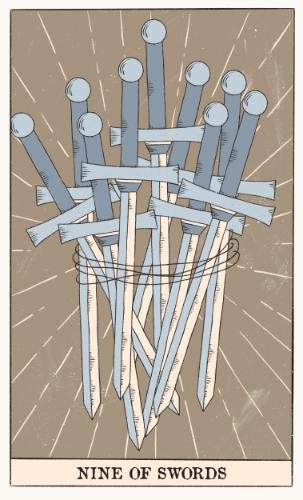
The Nine of Swords depicts a figure in bed, awake in the darkness, overwhelmed by anxious thoughts and mental torment. This card signifies that you are experiencing significant stress, worry, or anxiety that is affecting your sleep and peace of mind. The nine swords hanging above represent the weight of repetitive, intrusive thoughts that feel inescapable.
When this card appears, it suggests you are caught in a cycle of worry about past events or future possibilities that may not materialize. Your mind is working against you, creating worst-case scenarios and amplifying problems beyond their actual severity. This is a card of mental struggle rather than external crisis—the real challenge exists in your thoughts.
The Nine of Swords often indicates depression, despair, or feeling trapped by circumstances. You may experience insomnia, nightmares, or constant mental chatter that prevents relaxation and clarity. This card frequently appears during periods of high stress, unresolved conflict, or when carrying guilt and regret.
However, this card also contains an important message: the suffering is often self-imposed through thought patterns. Recognition of this can be empowering, as it suggests you have some control over the situation through shifting your perspective and mental habits. The darkness depicted is real but temporary. Professional support, meditation, journaling, or therapeutic intervention can help break the anxious thought cycles this card represents.
Reversed Meaning
The Nine of Swords reversed suggests relief from mental torment and a gradual emergence from anxiety and worry. This position indicates that the intense overthinking and fear-based thought patterns are beginning to loosen their grip on your mind. You may be finding ways to quiet your racing thoughts and experience more peaceful sleep.
This reversal often signals the beginning of healing from depression, stress, or anxiety. You're developing perspective on situations that previously felt overwhelming, recognizing that your worries were disproportionate to actual circumstances. The darkness is lifting, and mental clarity is returning.
Reversed, this card can indicate that you're learning to manage anxious thoughts through healthy coping mechanisms, professional help, or simple rest and recovery. You may be releasing guilt, forgiving yourself, or letting go of rumination about past events. This is a position of hope and improvement after a difficult mental period.
However, the reversed position can also suggest avoidance or denial of real problems that require attention. Be careful not to suppress legitimate concerns or dismiss genuine issues that need addressing. The improvement may be surface-level if underlying causes aren't resolved. This card reversed encourages you to move forward with resilience while remaining realistic about challenges, integrating the lessons learned during the difficult period represented by the upright position.
Yes/No Meanings
In Love
No. This card suggests emotional turmoil, communication difficulties, or anxiety poisoning the relationship dynamic.
In Career
No. Career prospects are clouded by worry, stress, or a toxic work environment creating mental distress.
In Finances
No. Financial anxiety and worry about money are predominant; this is not a favorable position for financial growth.
In Spirituality
Maybe. This card can represent a spiritual crisis or dark night of the soul that ultimately leads to deeper understanding.
Symbolism
The Nine of Swords card imagery powerfully illustrates mental suffering through specific visual elements. The central figure sits upright in bed, often with head in hands, displaying distress and desperation. The darkness surrounding them represents the night—traditionally a time when anxious thoughts amplify without daytime distractions. This darkness also symbolizes depression and the clouded thinking characteristic of anxiety.
The nine swords hanging prominently above the figure are the card's most striking feature, representing the weight of multiple worries, intrusive thoughts, and mental burdens pressing down simultaneously. Each sword can represent different anxieties competing for attention. The swords' sharp, pointed nature emphasizes how painful and cutting these thoughts feel.
The bed itself symbolizes rest and safety violated—sleep becomes impossible when the mind is turbulent. The figure's posture and facial expression convey helplessness and the exhaustion that accompanies mental anguish. Some depictions show an astrological symbol or mural in the background, representing the cosmic or cyclical nature of these struggles.
The overall composition emphasizes isolation and internal struggle, distinguishing this card from external difficulties. There are no other figures present—this is a solitary mental battle. The positioning of swords overhead creates a sense of inescapable pressure, suggesting the sufferer feels trapped by their own thoughts and unable to escape the mental prison they've created.
Practical Advice
If the Nine of Swords appears in your reading, prioritize mental health interventions immediately. Establish a consistent sleep routine, limit caffeine and stimulating content before bed, and consider meditation or mindfulness practices to interrupt anxious thought loops. Journaling your worries can externalize them, making them feel less overwhelming. Professional support from a therapist or counselor is valuable—anxiety often responds well to cognitive behavioral therapy techniques. Physical exercise reduces anxiety significantly. Avoid rumination by setting specific worry times rather than letting anxiety permeate your entire day. Challenge catastrophic thinking patterns by asking if your worries are based on facts or assumptions. Connect with trusted friends, as isolation amplifies anxiety. Be compassionate with yourself—this is temporary, and your mind's current perspective is distorted by stress.
Example Scenarios
Scenario 1
A person struggling with insomnia due to work-related stress consults tarot and receives the Nine of Swords, validating their experience of mental torment while encouraging them to seek professional help or implement stress-reduction strategies before the anxiety becomes more entrenched.
Scenario 2
Someone in a relationship experiencing constant worry about abandonment or conflict receives this card, signaling that their anxious thoughts may be creating unnecessary drama and suggesting they need to address underlying insecurity through honest communication or therapy.
Scenario 3
A student facing exam anxiety pulls this card, recognizing they're trapped in overthinking patterns that actually harm performance; the card encourages them to step back, implement study breaks, and address unrealistic perfectionist standards.